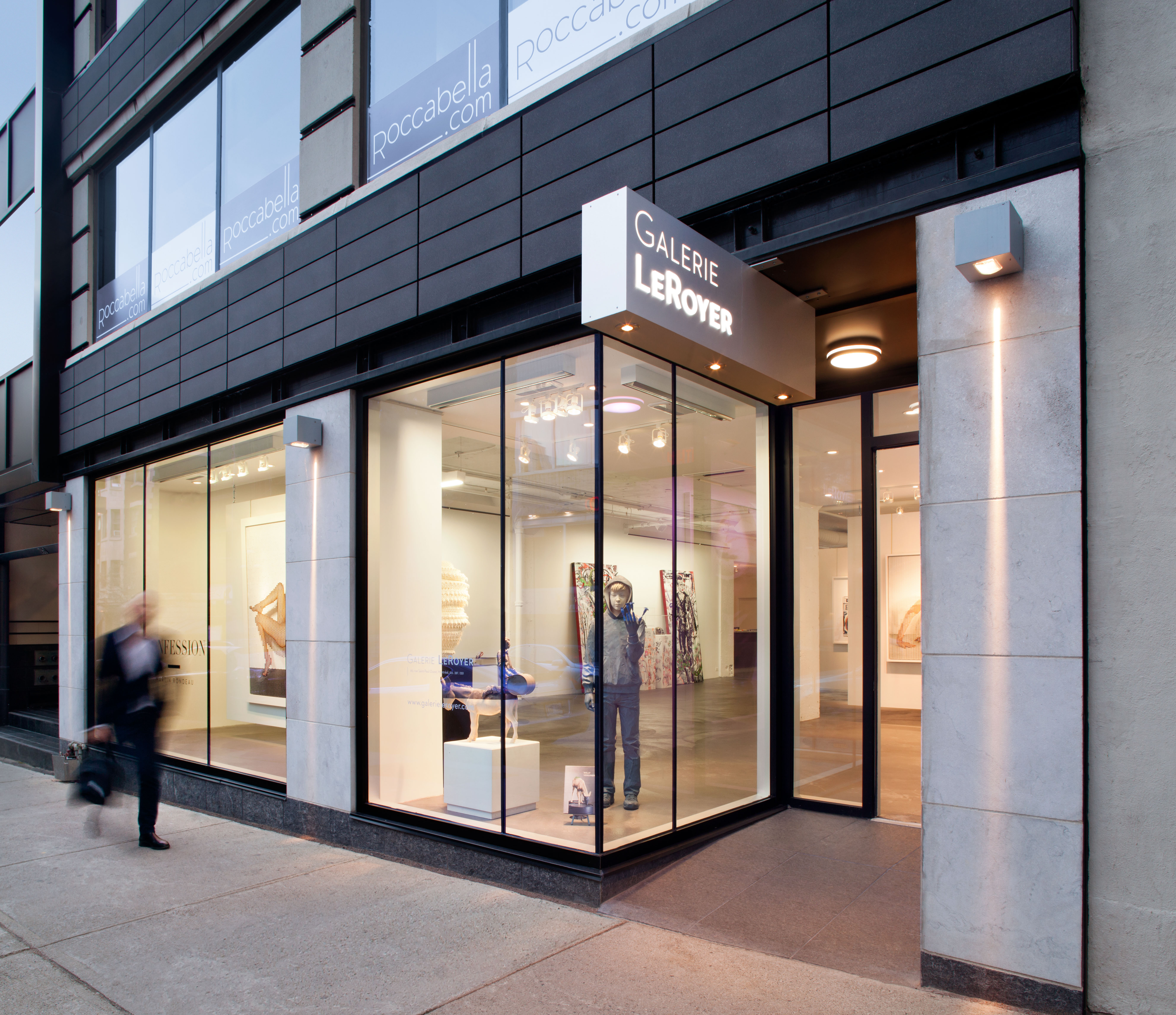
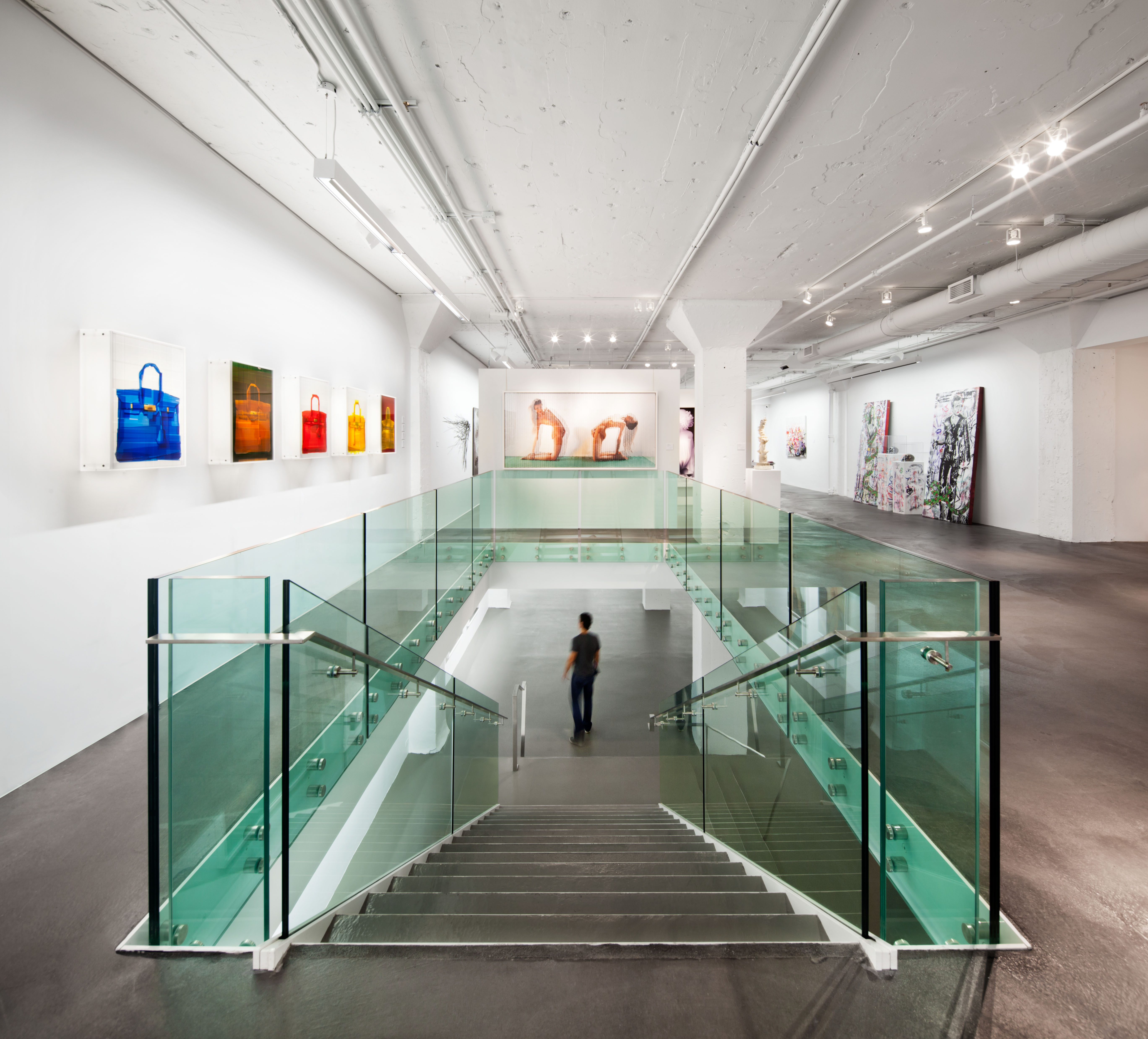
FR Lorsque Gupta Architecture a été mandaté pour transformer un restaurant en la galerie d’art contemporain LeRoyer, la ligne directrice du projet s’est rapidement dévoilée : créer une boîte blanche qui met l’art en valeur. Malgré ce concept simple en apparence, des défis se sont présentés: l’électricité, la mécanique et la plomberie ont dû être minutieusement coordonnées afin de permettre aux colonnes structurales d’être exposées et de créer une esthétique dépouillée et industrielle; au sous-sol, des solutions architecturales créatives ont été trouvées pour contrecarrer les contraintes posées par le plafond très bas à certains endroits.
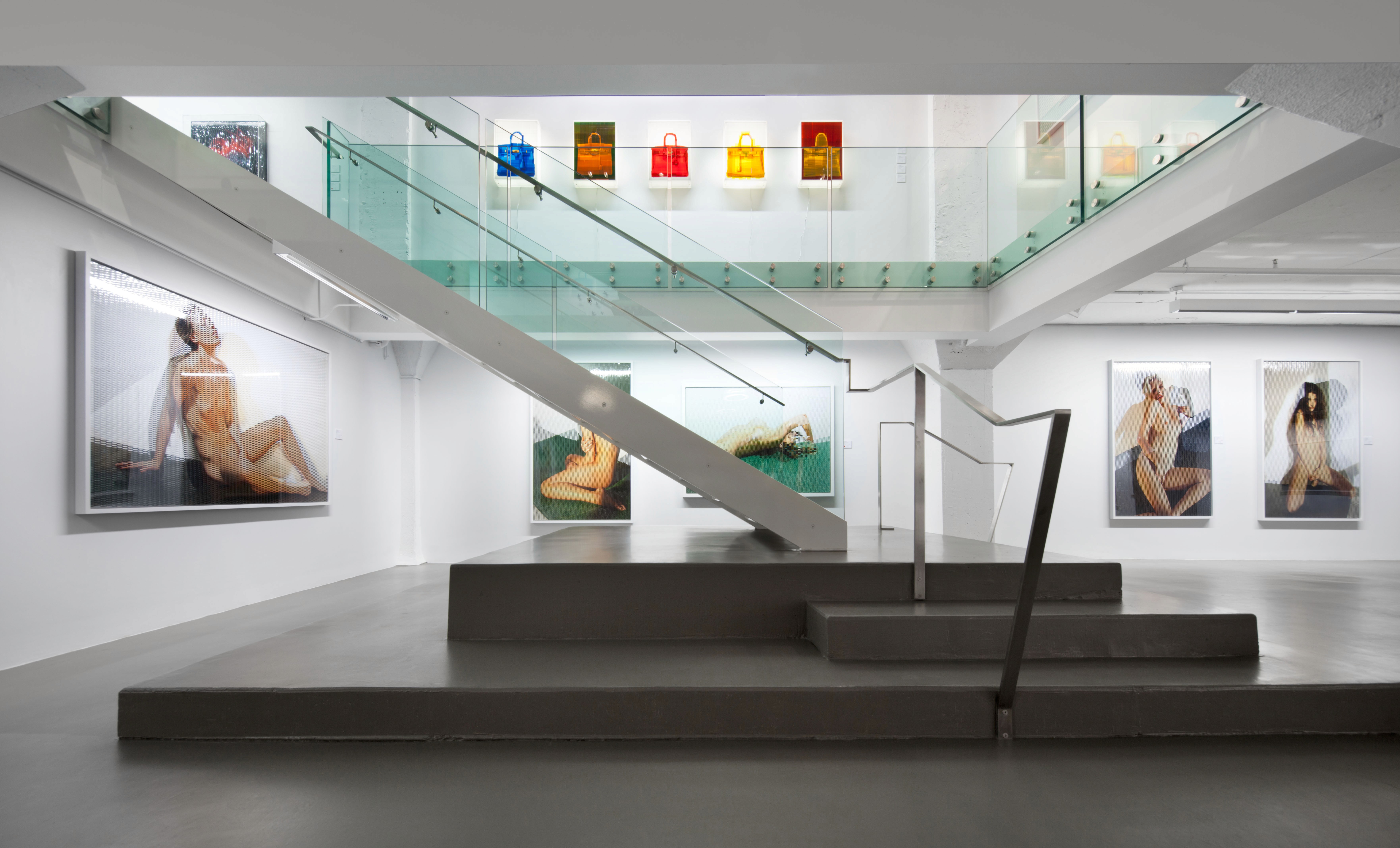
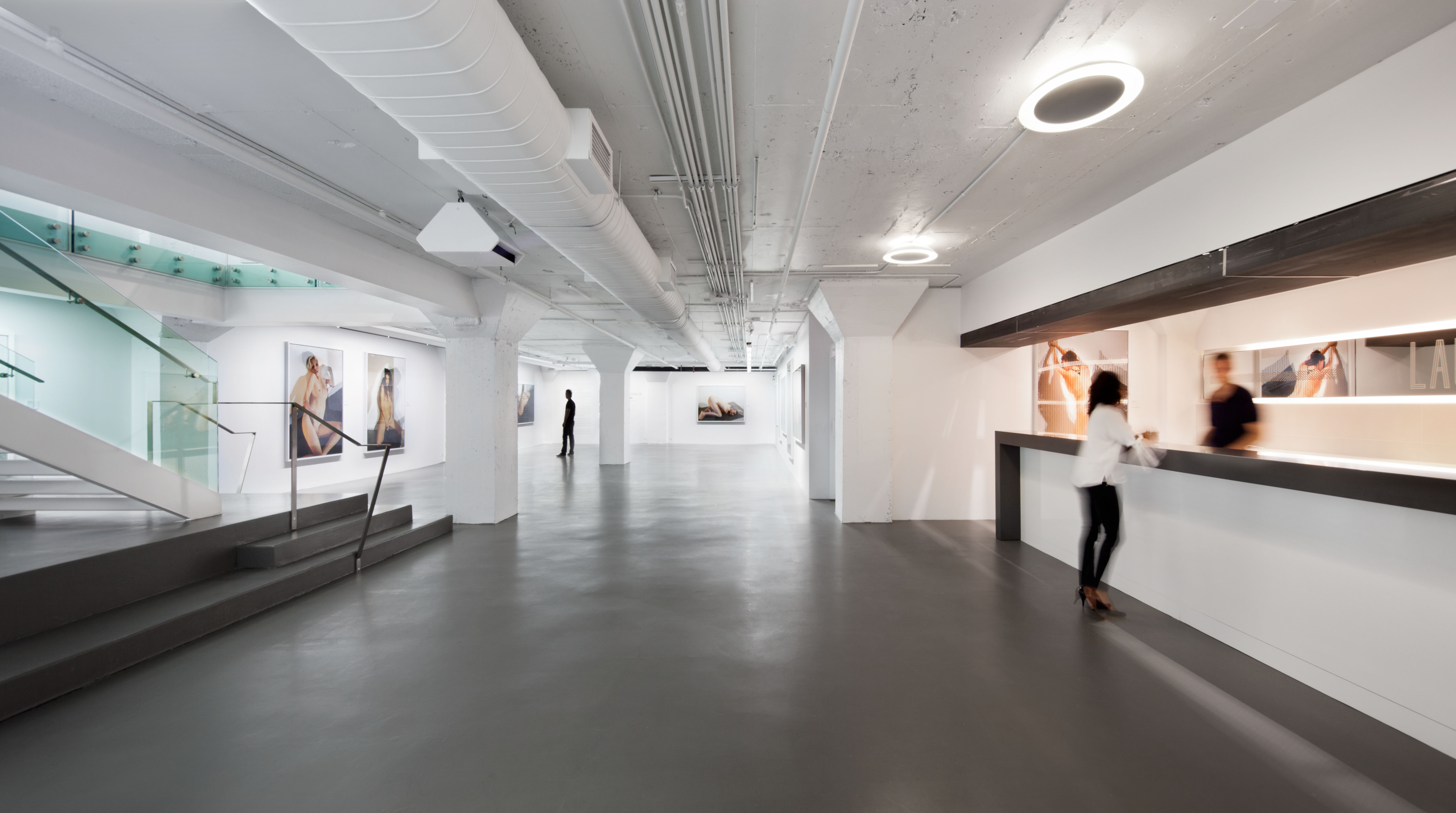
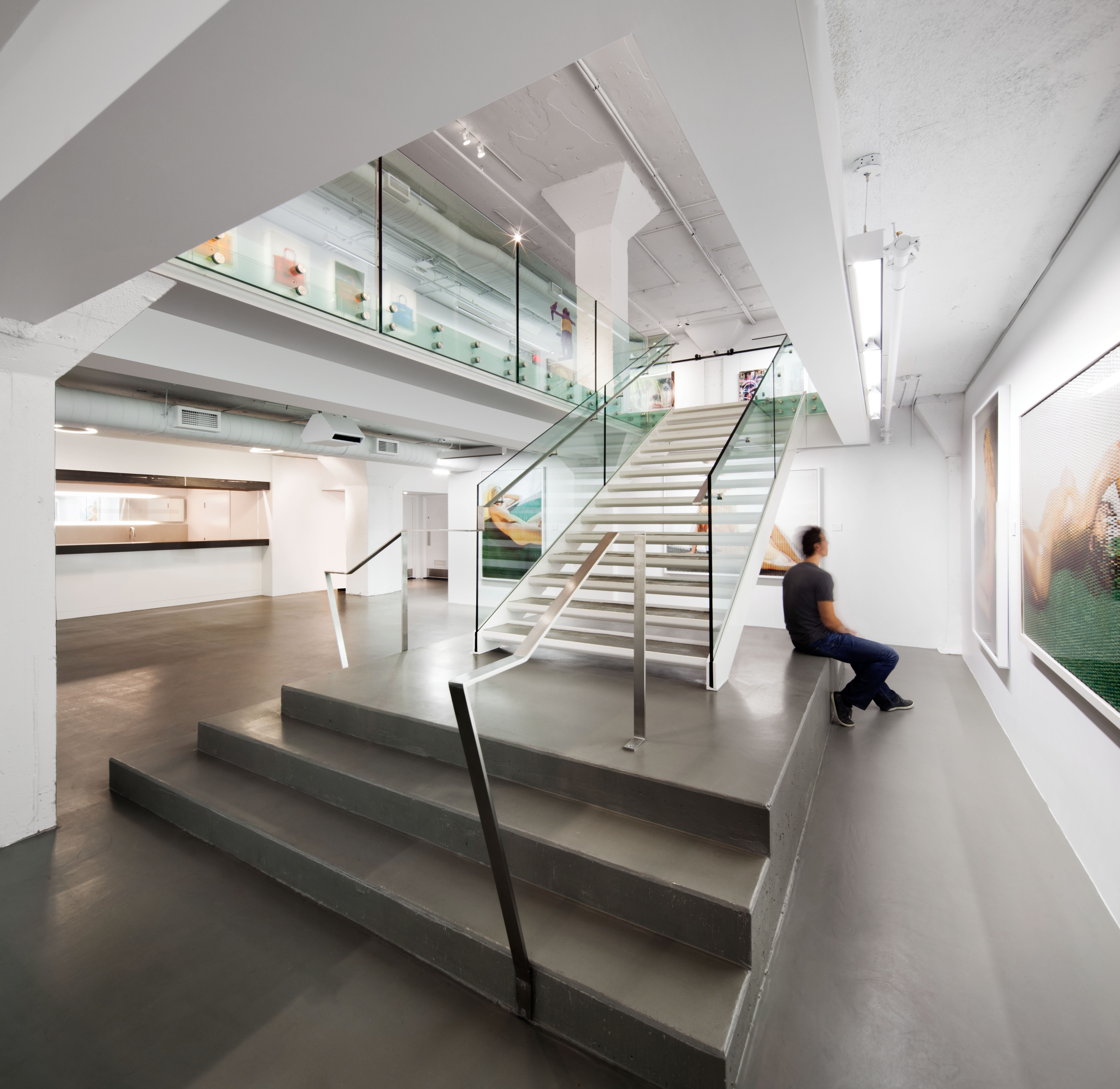
En plus d’être une galerie d’art, La Galerie LeRoyer se voulait un lieu pour la tenue d’évènements : une cuisine ouverte et un bar ont été aménagés respectivement au rez-de-chaussée et au sous-sol. Pour créer un endroit de rassemblement, l’escalier central se termine au sous-sol sur une plateforme en béton, à la fois socle pour sculptures et banc pour visiteurs.
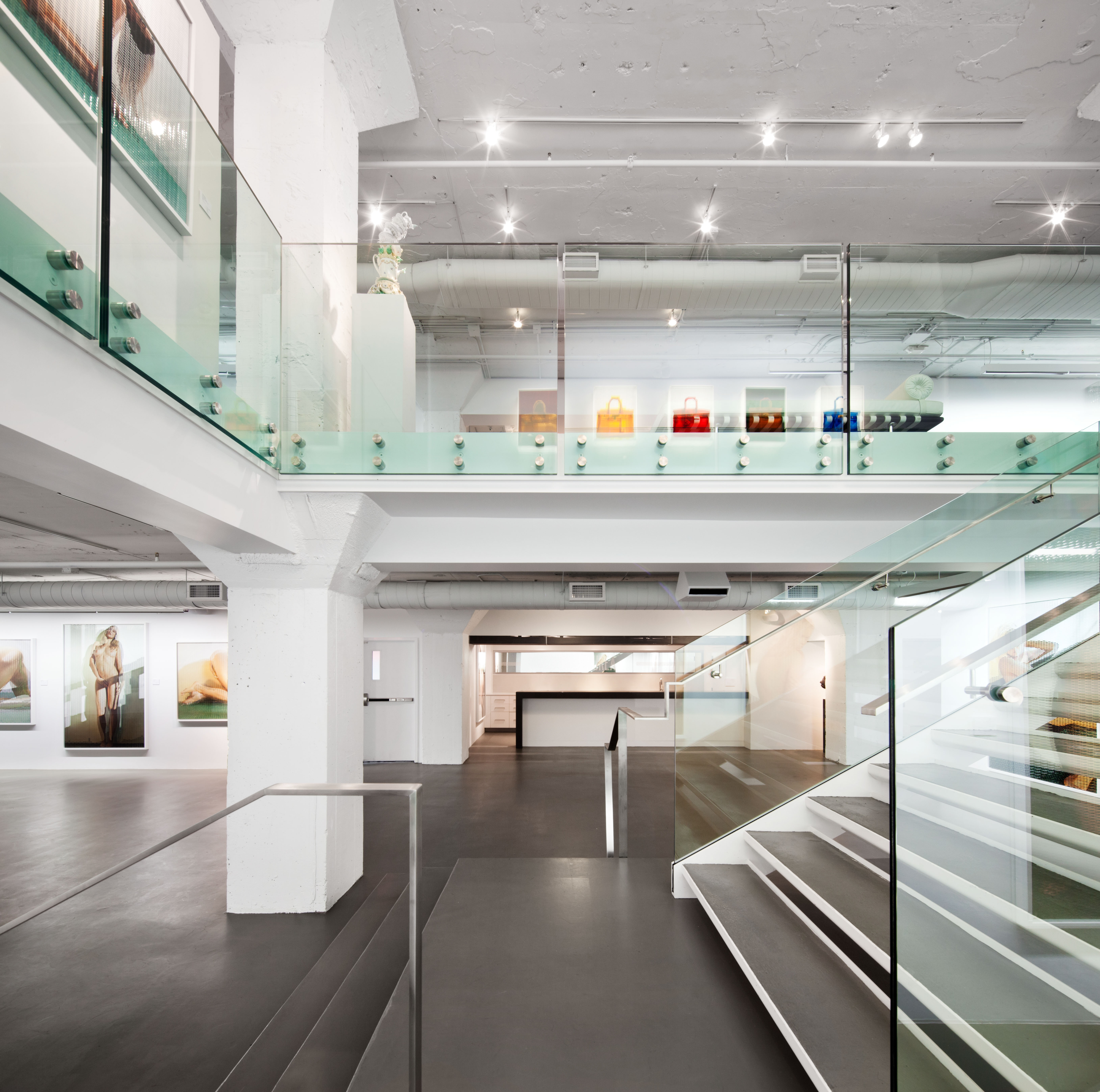
L’escalier central, élément structurant du parcours de la galerie, est en acier peint, acier inoxydable et verre : un contraste voulu avec les matériaux bruts adjacents.
Le résultat final est un espace à la fois épuré et convivial qui place l’art au premier plan.
EG/GC : P&R Desjardins
Photos © Stéphane Brügger.
FR Lorsque Gupta Architecture a été mandaté pour transformer un restaurant en la galerie d’art contemporain LeRoyer, la ligne directrice du projet s’est rapidement dévoilée : créer une boîte blanche qui met l’art en valeur.
Malgré ce concept simple en apparence, des défis se sont présentés: l’électricité, la mécanique et la plomberie ont dû être minutieusement coordonnées afin de permettre aux colonnes structurales d’être exposées et de créer une esthétique dépouillée et industrielle; au sous-sol, des solutions architecturales créatives ont été trouvées pour contrecarrer les contraintes posées par le plafond très bas à certains endroits.
En plus d’être une galerie d’art, La Galerie LeRoyer se voulait un lieu pour la tenue d’évènements : une cuisine ouverte et un bar ont été aménagés respectivement au rez-de-chaussée et au sous-sol. Pour créer un endroit de rassemblement, l’escalier central se termine au sous-sol sur une plateforme en béton, à la fois socle pour sculptures et banc pour visiteurs.
L’escalier central, élément structurant du parcours de la galerie, est en acier peint, acier inoxydable et verre : un contraste voulu avec les matériaux bruts adjacents.
Le résultat final est un espace à la fois épuré et convivial qui place l’art au premier plan.
EN When Gupta Architecture was mandated to transform an existing restaurant into the contemporary art gallery Galerie LeRoyer, the project concept was quickly found: to create a white box that would allow the art to take centre stage.
In spite of this seemingly simple task, many challenges emerged: The electrical, mechanical and plumbing equipment had to be meticulously coordinated in order to allow the structural columns to be fully exposed and create a minimalist and industrial aesthetic; Creative architectural solutions had to be found to deal with a sometimes very low ceiling height in the basement.
In addition to its art vocation, Galerie LeRoyer was meant to serve as an event space; an open kitchen and a bar were built respectively on the ground floor and basement. In order to create a gathering space in the basement, the central staircase sits on a concrete platform that serves as a sculpture’s pedestal or a visitors’ bench.
The central staircase, important organizing element of the path through the gallery, is made of painted steel, stainless steel and glass: a deliberate contrast with the adjacent raw materials.
The final resulting space is bare yet welcoming and lets the art be the main focus.
EN When Gupta Architecture was mandated to transform an existing restaurant into the contemporary art gallery Galerie LeRoyer, the project concept was quickly found: to create a white box that would allow the art to take centre stage.
In spite of this seemingly simple task, many challenges emerged: The electrical, mechanical and plumbing equipment had to be meticulously coordinated in order to allow the structural columns to be fully exposed and create a minimalist and industrial aesthetic; Creative architectural solutions had to be found to deal with a sometimes very low ceiling height in the basement.
In addition to its art vocation, Galerie LeRoyer was meant to serve as an event space; an open kitchen and a bar were built respectively on the ground floor and basement. In order to create a gathering space in the basement, the central staircase sits on a concrete platform that serves as a sculpture’s pedestal or a visitors’ bench.
The central staircase, important organizing element of the path through the gallery, is made of painted steel, stainless steel and glass: a deliberate contrast with the adjacent raw materials.
The final resulting space is bare yet welcoming and lets the art be the main focus.
EG/GC : P&R Desjardins. Photos © Stéphane Brügger.